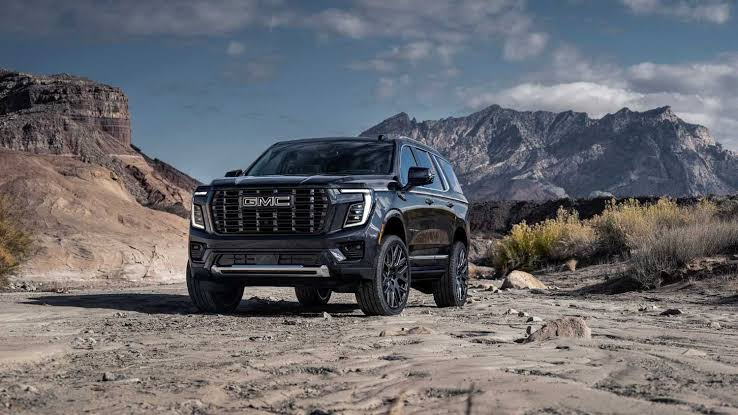
Just over a decade ago, diesel engines seemed poised to take over the U.S. auto market thanks to their combination of torque and fuel economy.
However, the Dieselgate emissions scandal largely pushed this expensive and dirty fuel back into the commercial-vehicle market, particularly large trucks. Today, only four new SUVs remain available to consumers with diesel engines, making them the best new diesel SUVs on the market.
General Motors’ large SUVs
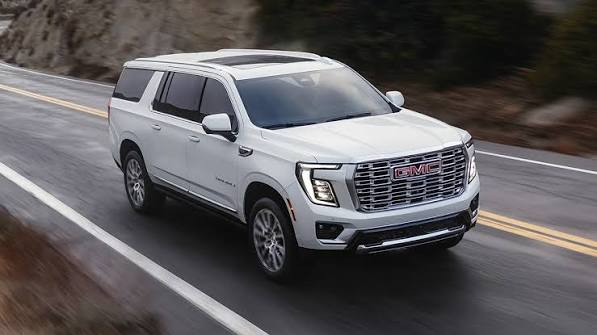
There is little variety among the four remaining new diesel SUVs, as they are essentially different versions of the same vehicle, developed and manufactured by General Motors: the Chevrolet Tahoe, Chevrolet Suburban, GMC Yukon, and GMC Yukon XL.
All are based on the same platform and use the same optional 3.0-liter turbocharged Duramax diesel engine, producing 305 hp and 494 lb-ft of torque.
Below, we’ll explore the differences between the Chevrolet and GMC vehicles. To broaden the selection beyond this new-SUV quartet, we have also included several of the best used SUVs shoppers seeking for with a late-model diesel engine buyers can find at US dealerships.
2026 GMC Yukon/Yukon XL
GMC first offered its version of the Suburban in 1937, and it remained that way until 2000, when it was renamed the Yukon XL. The more compact Yukon actually predated its Tahoe twin by three years, having been introduced in 1992.
Like the Chevrolet models, the Yukon is body-on-frame, available with rear- or all-wheel drive, and offers three rows of seating. Again, the right choice depends on your budget and how much you need to carry behind the third row.
Unlike the Chevrolet, a diesel engine is available on base trims for an additional $4,265 with rear-wheel drive, $4,390 for the all-wheel-drive Yukon, or $4,480 for the all-wheel-drive Yukon XL. In each case, it is paired with the same 10-speed automatic transmission and returns 23 or 26 mpg combined.
2026 Chevrolet Tahoe/Suburban
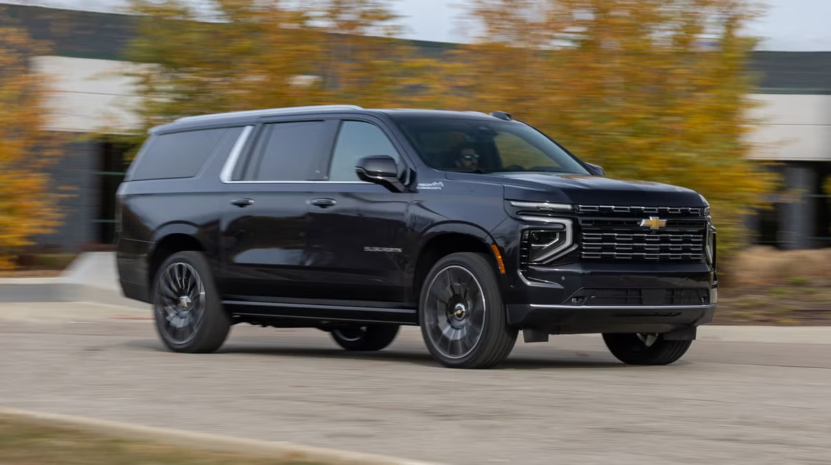
The Chevrolet Suburban is the world’s longest-running model, first introduced in 1934 and produced every year since. In 1994, Chevrolet introduced the Tahoe as a shorter alternative. Both vehicles are still sold today, offer all-wheel drive, and provide three rows of seating.
Which one you choose largely depends on your budget and how much cargo space you need behind the third row.
Both vehicles come standard with a 5.3-liter gasoline V-8, but stepping up to the LT trim makes the 3.0-liter diesel I-6 available for an additional $5,495 with rear-wheel drive or $5,620 with all-wheel drive.
Either way, the diesel is paired with a 10-speed automatic transmission and delivers between 23 and 26 mpg combined, depending on the model.
2024 Cadillac Escalade
The Escalade is a marketing triumph. It began life in 1999 as a GMC Yukon wearing a Cadillac badge, yet it has since become an icon in its own right. It is fundamentally related to the GMC and Chevrolet models, though it offers a more upscale experience.
From the 2021 through 2024 model years, the Escalade was also available with a 3.0-liter Duramax I-6 diesel engine, producing the same 305 hp and 450 lb-ft of torque. It used a 10-speed automatic transmission and was available with rear- or all-wheel drive.
Unlike the others, the diesel Escalade was only offered in the standard-length version. It returned 22 mpg combined with either rear-wheel drive or all-wheel drive.
2023 Jeep Wrangler EcoDiesel
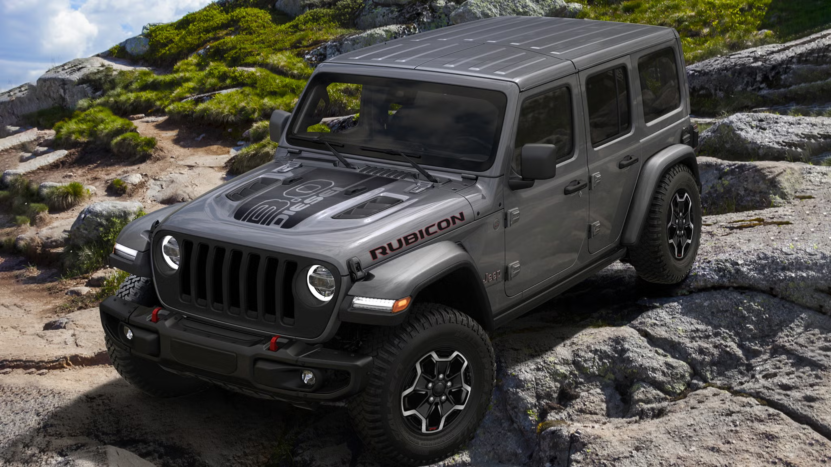
As much as off-road enthusiasts praise diesel engines for their low-end torque, the American off-road icon, the Jeep Wrangler, has only been offered with a diesel engine for nine years in its 82-year history.
Initially, the CJ-5 was available with a British Perkins diesel I-4 from 1961 to 1965. Jeep later offered the Italian EcoDiesel turbocharged V-6 in the Wrangler from 2020 through 2023.
The 3.0-liter EcoDiesel was available exclusively in the four-door Wrangler, but it could be ordered in any trim level, including the rugged Rubicon. It produced 260 hp and 326 lb-ft of torque, and, with its eight-speed automatic transmission, achieved 22 to 23 mpg combined.
2021 Land Rover Range Rover TD6
Range Rovers have been offered with diesel engines in Europe since the late 1980s, but they did not become available in the U.S. until 2016. Land Rover continued to produce the diesel Range Rover despite the Dieselgate scandal, offering the TD6 with a 3.0-liter turbodiesel V-6 that produced 254 hp and 400 lb-ft of torque.
Paired with an eight-speed automatic transmission and permanent all-wheel drive, it delivered 24 mpg combined. The diesel engine was discontinued five years later, in 2021.
2019 Mazda CX-5 Diesel
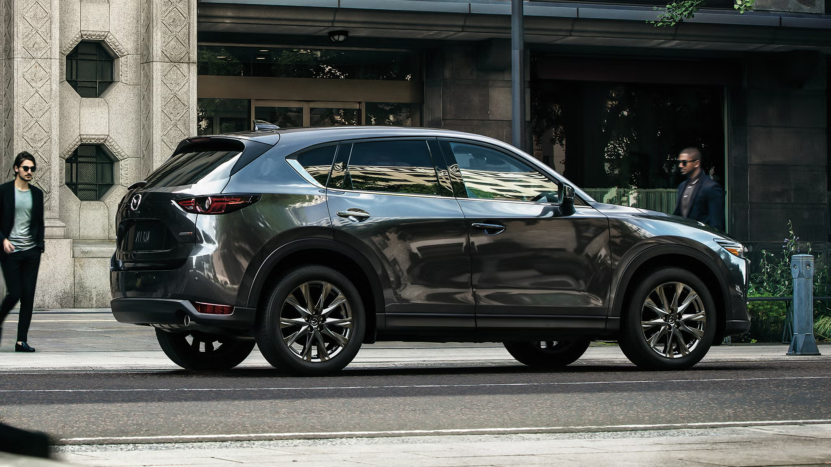
Mazda struggled to certify its only diesel model for the U.S. market, finally succeeding in 2019. After all that effort, however, the CX-5 Skyactiv-D diesel lasted only one model year, making it the rarest vehicle on this list.
Equipped with a 2.2-liter turbodiesel I-4 producing 168 hp and 290 lb-ft of torque, plus a six-speed automatic transmission, the CX-5 diesel achieved 28.0 mpg combined with all-wheel drive and 29.0 mpg with front-wheel drive.
Given the declining diesel passenger-car market, Mazda suspended diesel-engine production in 2020 and announced its complete discontinuation in early 2021.
2018 BMW X5 xDrive35d
Like Land Rover, BMW has long produced diesel engines and offered them in European models.
However, the German automaker was much quicker to introduce diesel power to the U.S. market, offering it in the X5 SUV beginning in 2009.
The xDrive35d model lasted nine years before suffering the consequences of the Dieselgate scandal. The 3.0-liter I-6 turbodiesel was offered in both the second-generation E70 and third-generation F15 models.
When the fourth-generation G05 launched for the 2019 model year, the diesel engine disappeared.
The 35d’s final year was 2018, producing 255 hp and 413 lb-ft of torque. With an eight-speed automatic transmission and standard all-wheel drive, it returned 25 mpg combined.
2016 Porsche Cayenne Diesel

Most people would not associate Porsche, a sports-car company, with diesel engines, but its history with this powerplant technically dates back to the 1940s. At that time, Porsche developed a series of diesel-powered tractors that were sold until 1963.
The German automaker did not revisit diesel power until 2009, when it released a 3.0-liter turbodiesel V-6 in European versions of the first-generation Cayenne.
The diesel engine did not arrive in America until 2013 with the second-generation Cayenne.
This 3.0-liter V-6 diesel produced 240 hp and 406 lb-ft of torque before the company discontinued it in 2016, when it was embroiled in the Dieselgate scandal.
With an eight-speed automatic transmission and standard all-wheel drive, it could achieve 24.0 mpg combined.